Research
Smart Agricultureal Technology Research Division


 We are striving to develop and disseminate open-field smart agriculture technologies, expand non-rice crop cultivation, and promote field adaptation.
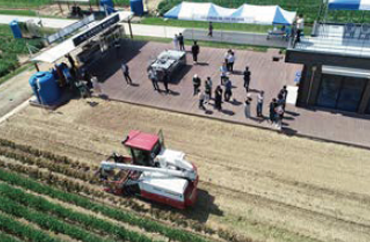
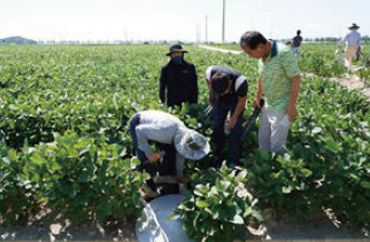
We are striving to develop and disseminate open-field smart agriculture technologies, expand non-rice crop cultivation, and promote field adaptation. - Development and field demonstration of core open-field smart agriculture element technologies
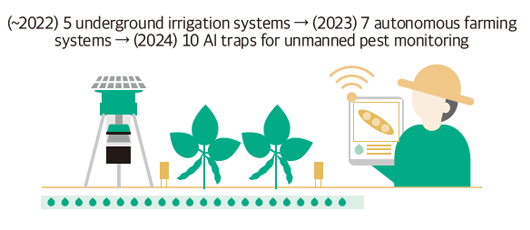
- (Water Management) Development of integrated irrigation and drainage water management technology to simultaneously address drought and waterlogging
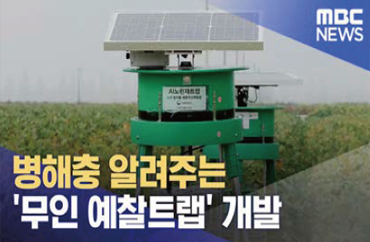
- (Pest Management) Development of AI traps for unmanned pest monitoring and field deployment in conjunction with pilot projects
- (Integrated Control) Additional technology verification for the integrated open-field control system
- (Nutrient Management) Development of real-time soil nutrient (nitrogen, phosphate, potassium) measurement sensors
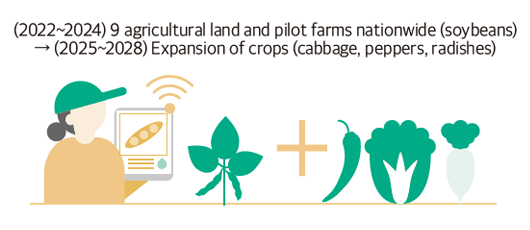
- (Testbed) Establishment and verification of a testbed for agricultural land and pilot farms
- Expanding the field dissemination of water management technologies to stabilize the production base of rice and other crops
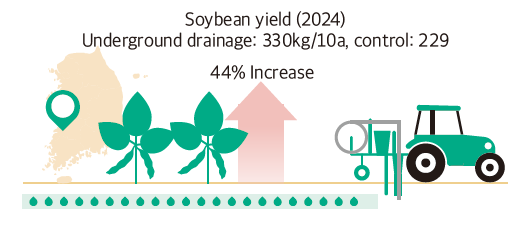
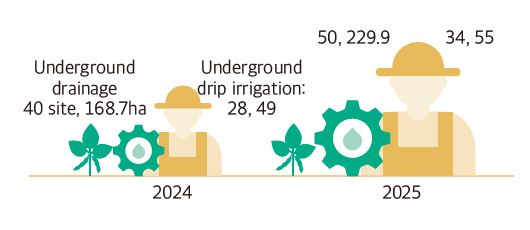
- (Field Demonstration) Verification of no-drill underground drainage effects in wheat–soybean double-cropping areas (Gimje, Jangseong)
- (Pilot Project) Field implementation of precision water management (No-drill underground drainage, underground drip irrigation, etc.)
- Research on cultivation stability and production increase to increase soybean self-sufficiency
- Field demonstration of appropriate cultivation technologies to increase soybean productivity in rice fields
- Applied technologies (Common): Compost, varieties, irrigation, topdressing
- Technology input effect (2024): 13% (2~35%) increase in yield
- Yield evaluation of major soybean varieties to determine late-sowing limits
- Late-sowing limits: July 15 for 'Seonyu2' (15% yield reduction), July 5 for 'Seonpung' (8% yield reduction)
- Field demonstration of appropriate cultivation technologies to increase soybean productivity in rice fields